

1.23 Million Devices Across Nine Fan Zones
EZELINK partnered with Ooredoo to build and run the connectivity behind nine fan zones and 356 buses during the 2022 World Cup in Qatar — 1,619 Wi-Fi 6 access points, 2,890 metres of civil works, and zero security incidents across the tournament.
Nine Sites, Two Months, and No Second Chance
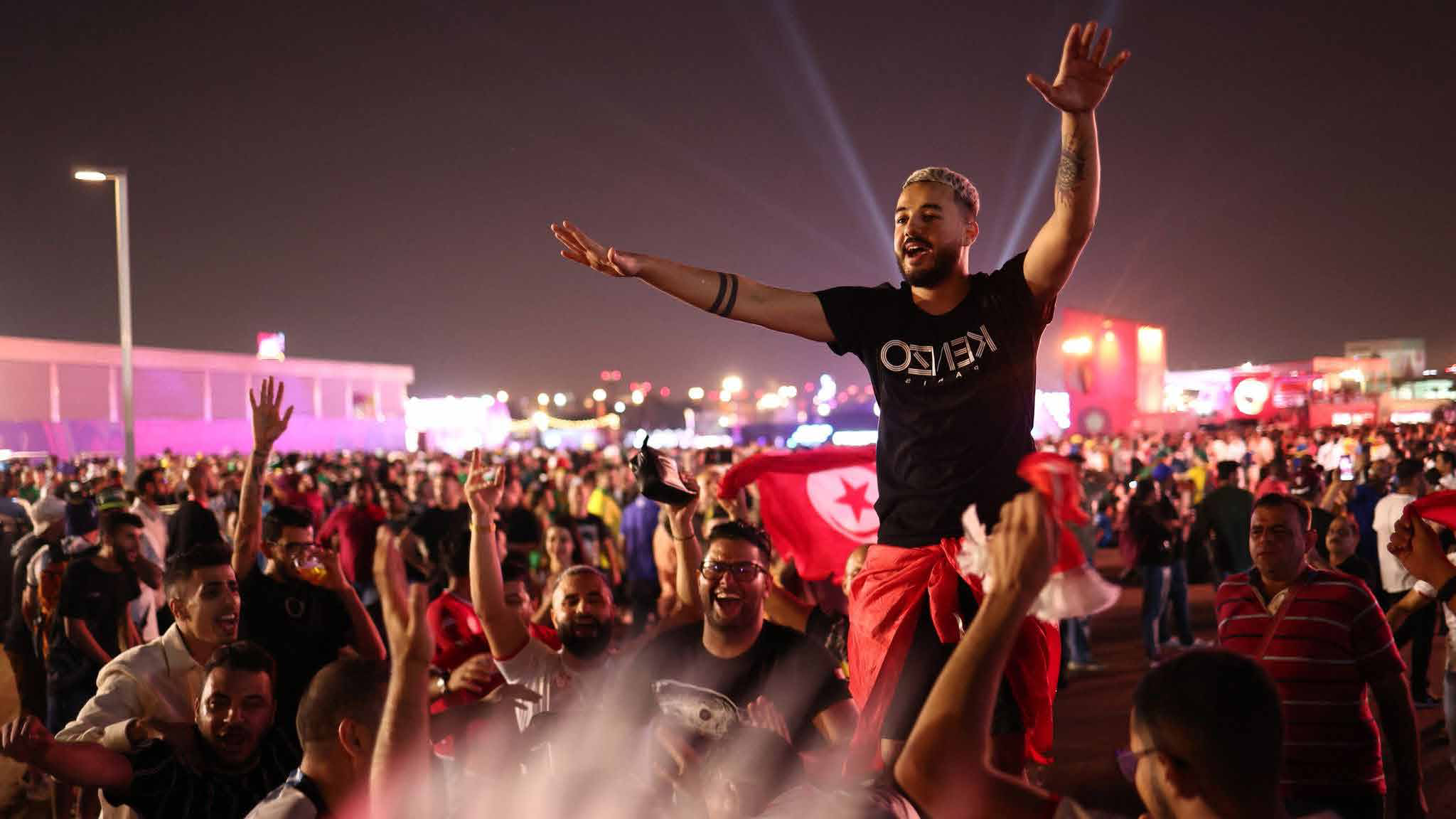
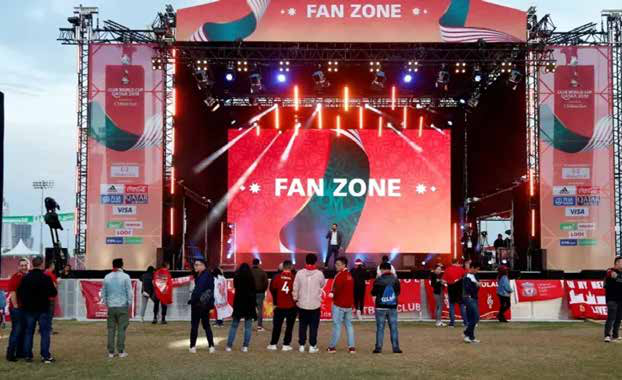
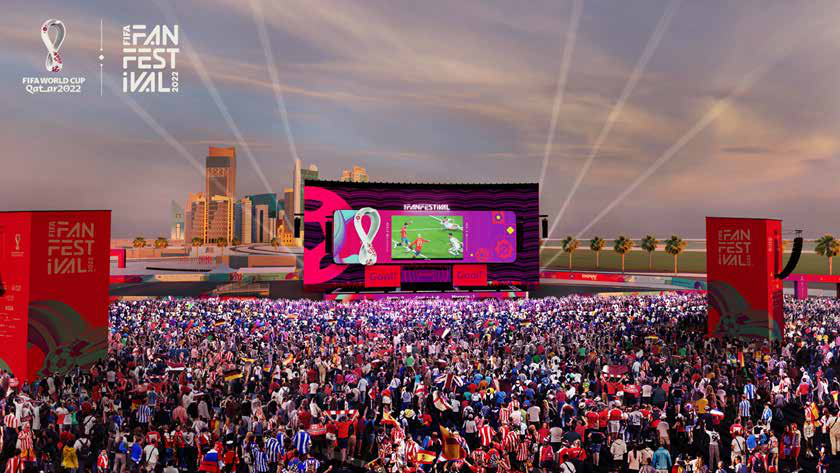
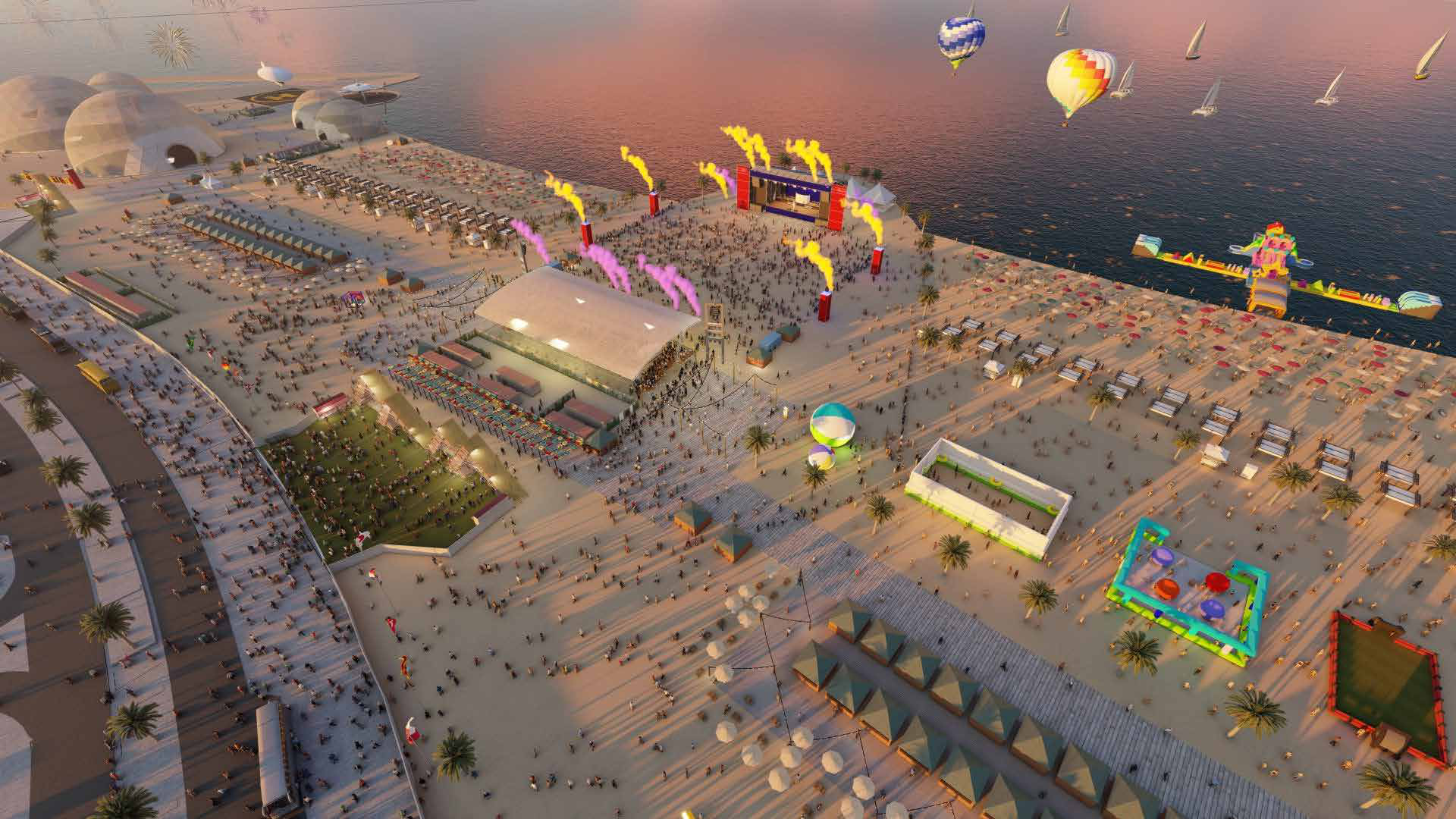
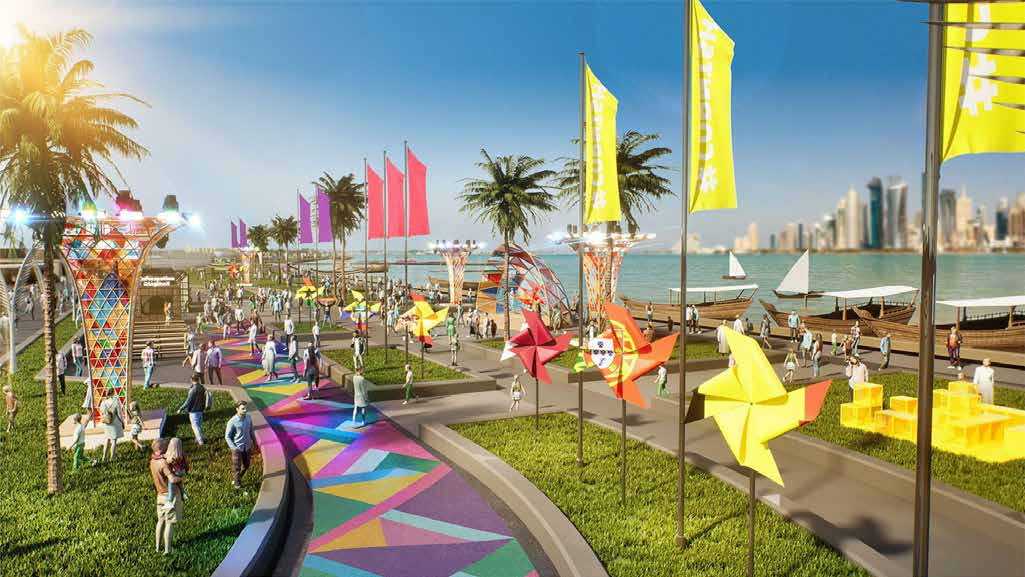
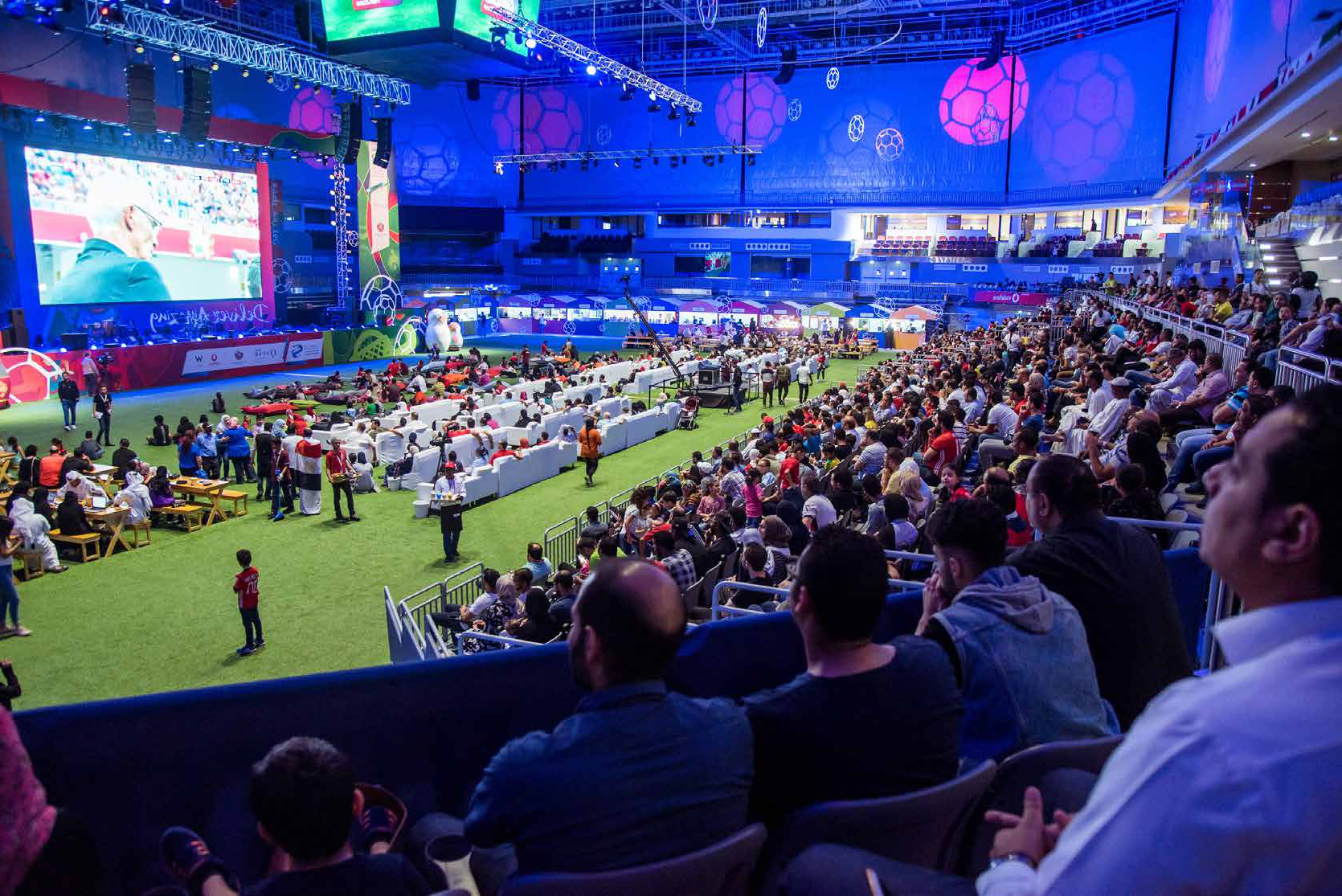
Nine fan zones spread across Qatar, no two alike. Open-air stadium bowls, industrial-area sites, music-festival grounds and a waterfront corniche — each with its own terrain, its own power situation and its own crowd profile. Some would hold two thousand people. Corniche Doha would see close to 344,000 devices.
Most of them had no usable infrastructure at all. Before a single access point could go up, there was ground to trench, fibre to pull and cable to protect from a hundred thousand pairs of feet. And running alongside all of it: 356 buses carrying players, referees, VIPs and international media between venues, needing connectivity that held while moving.
- Nine sites with different terrain, weather exposure and crowd density
- 2,000–5,000 concurrent users per zone, peaking at 343,946 devices at Corniche Doha
- Media uploads, player communications and VIP connectivity on buses in motion
- Full compliance with Qatar's internet regulations across all public access
- A fixed, immovable deadline: November–December 2022
Ground Up: Civil Works, Then Wi-Fi 6
The build started underground. Across the nine zones we completed 2,890 metres of civil works — trenching, GI and flexi pipe, cable ramps and humps, and 925 metres of fibre pulling at Asian Town alone — so that power and cabling were protected against weather and foot traffic for the duration.
On top of that went 1,619 Wi-Fi 6 outdoor access points, sized per zone against expected crowd density. Each zone got its own resilient core: an active and standby wireless access gateway, an active and passive wireless LAN controller, and an active and standby core switch — 18 of each across the programme — plus 195 network edge switches and firewalls at three sites.
Every zone reported into one cloud dashboard, with automated provisioning and firmware updates that cut manual IT work by 70%. Quality of service capped users at 10–20 Mbps to stop a handful of heavy users degrading a crowd of thousands.
| Fan zone | Access points |
|---|---|
| Asian Town | 473 |
| Barwa M'kaines | 352 |
| Nas Bin Ajayan | 169 |
| Arcadia | 144 |
| Al-Kharrara | 138 |
| Corniche Doha | 136 |
| Barwa Entertainment | 87 |
| Industrial Area | 82 |
| Barwa Al Baraha | 38 |
| Total deployed | 1,619 |
356 Buses, 100% Uptime
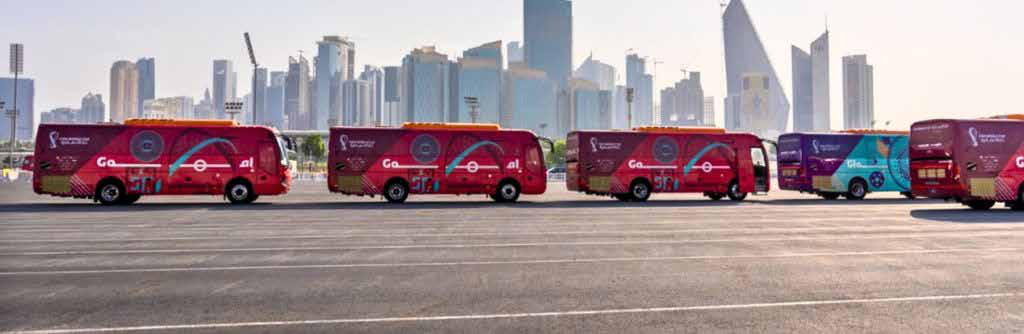
Alongside the fan zones, we powered 356 buses with mobile broadband and delivered transportation-grade managed WiFi on 300 of them, monitored from Ooredoo's Qatar data centre. Players and referees used them between venues, VIPs for real-time engagement, and international media to upload files and run live broadcasts on the move.
Onboarding was by QR code — no credentials to distribute to thousands of accredited people across dozens of nationalities. It achieved a 98% successful login rate.
The Numbers Behind the Build
- Fan zones
- 9
- Wi-Fi 6 access points
- 1,619
- Network edge switches
- 195
- Gateways · controllers · core switches
- 18 each (active + standby per zone)
- Firewalls
- 6, across three sites
- Civil works
- 2,890 metres
- Buses
- 356 connected · 300 with managed WiFi
- Project phases
- Planning 15 · Civil works 30 · Deployment 35 · Testing 10 · Handover 5 man-days
- Partner
- Ooredoo Qatar
2.9 Million Users in Eighteen Days
Between 1 and 18 December the network carried 2,934,987 users, with daily logins ranging from 141,000 on the quietest day to 235,476 on the busiest. Across the tournament, 1,234,311 devices connected, holding 15 Mbps average speeds under full load.
The buses ran at 100% uptime. There were zero security incidents. And when user numbers surged 30% above forecast during peak fixtures, the network absorbed it without additional hardware.
- 1,234,311 devices connected across nine zones
- 2,934,987 users between 1–18 December, peaking at 235,476 logins in a day
- Zero security incidents, fully compliant with Qatar's internet regulations
- 70% fewer manual IT tasks, with 95% of issues resolved proactively
- 30% user surges absorbed with no additional hardware
- 20% increase in fan dwell time, driven by portal analytics and targeted promotions
The Solutions Behind This Project
Let's Build the Network Your Event Depends On
Tell us the venue, the dates and the numbers you're expecting. Our engineers will survey the site and design around your peak, your build window and your media requirements.
Book a Free Venue Survey